
Choosing between braces and clear aligners is one of the biggest decisions you’ll make about your smile. Both work beautifully. Both have loyal fans. But the right choice depends on your case, your lifestyle, and your goals.
At Hamilton Orthodontics, Dr. Phillip Hamilton and the team offer both options so you get truly personalized care, not a one-size-fits-all recommendation. Here’s everything you need to compare the two side by side.

Braces vs. Clear Aligners: The Quick Answer
Braces use metal or ceramic brackets bonded to your teeth, connected by a wire that gently guides teeth into place. Clear aligners are removable, transparent plastic trays worn 20 to 22 hours a day that shift teeth gradually. Braces excel at complex cases with significant crowding, rotations, or bite issues. Clear aligners shine for mild to moderate misalignment when you want a discreet, flexible option. Both use gentle, steady pressure to remodel bone and move teeth over time. The best choice depends on case complexity, lifestyle, and how consistently you’ll wear removable trays.
At Hamilton Orthodontics, we offer clear aligners, metal braces, and clear braces so you never have to compromise. During your free consult, Dr. Hamilton reviews your smile and helps you pick the option that fits your goals.
How Braces and Clear Aligners Actually Work
Both treatments rely on the same biological principle: bone remodeling. When steady pressure is applied to a tooth, the bone on the pressure side breaks down while bone on the opposite side rebuilds. This is how teeth safely and permanently shift into their new positions.
The mechanics look different, though.
How braces work:
- Small brackets are bonded to the front of each tooth.
- A thin archwire connects the brackets and applies continuous, gentle force.
- Dr. Hamilton adjusts the wire and elastics at regular visits, typically every 4 to 8 weeks.
- Over time, the wire guides teeth into their planned positions.
Because braces are fixed in place, they work 24/7 without any effort from you.
How clear aligners work:
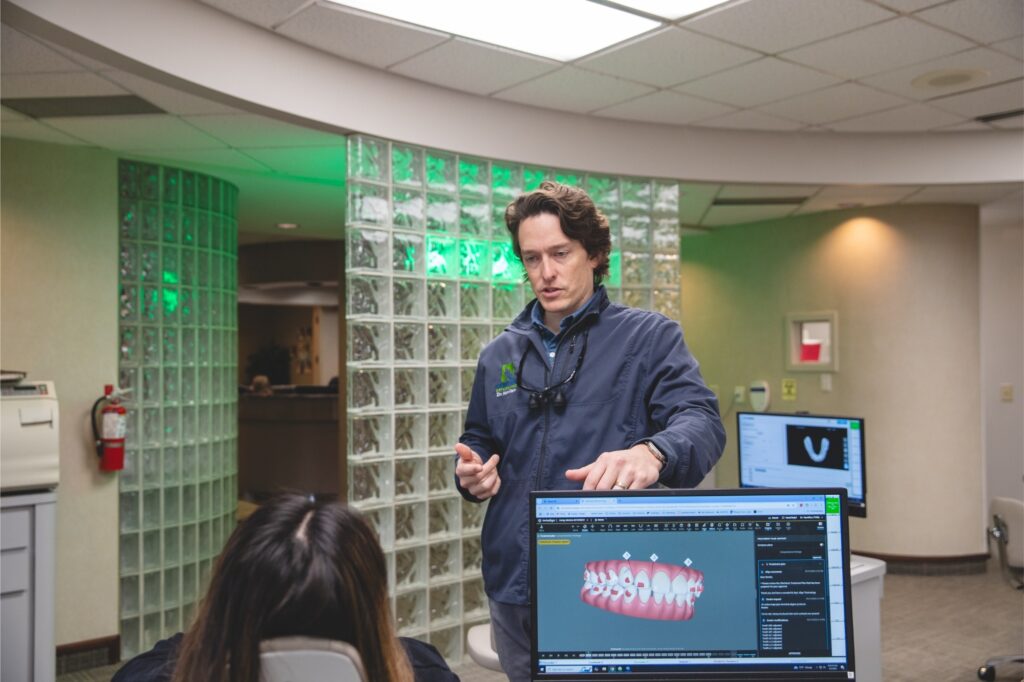
- Digital scans create a 3D model of your smile at Hamilton Orthodontics.
- Dr. Hamilton designs a personalized treatment plan mapped out from start to finish.
- You wear a series of custom trays, each for about 1 to 2 weeks.
- Small tooth-colored attachments and elastics may be added to handle trickier movements.
- Every tray shifts teeth a little closer to the final result.
Modern aligners can treat far more than they could a decade ago. Attachments expand what’s possible, and Hamilton Orthodontics offers DentalMonitoring, a smart technology that lets Dr. Hamilton check your progress remotely between visits. Fewer trips to the office, same great care.
Both treatments finish the same way: with retainers. Teeth naturally want to drift, and retainers keep your new smile locked in for the long haul.
Benefits of Braces vs. Clear Aligners
Each option has real strengths. Here’s an honest breakdown.
Benefits of Braces
- Handle any case complexity. Severe crowding, rotations, and challenging bites are no match for braces.
- Always on the job. Nothing to remove, nothing to forget. Braces work every hour of every day.
- No compliance worries. Great for kids, teens, or anyone who might not remember to reinsert trays.
- Style choices. Pick metal braces with colorful bands for a fun look, or choose clear braces for a subtle appearance.
- Predictable results for tough cases. For certain movements, brackets and wires simply outperform trays.
Benefits of Clear Aligners
- Virtually invisible. Most people won’t notice you’re straightening your teeth.
- Removable. Take them out to eat, brush, or for special moments like a wedding or job interview.
- Comfortable. Smooth plastic means no wires or brackets rubbing against cheeks and gums.
- No food restrictions. Popcorn, apples, corn on the cob? Still on the menu.
- Easier hygiene. Brush and floss like normal because there’s nothing in the way.
- Fewer office visits. Especially when paired with DentalMonitoring at Hamilton Orthodontics.
The truth is, both options end with a beautiful, confident smile. The path just looks different.

Side-by-Side Comparison: Braces vs. Clear Aligners
Here’s a quick-glance table to help you compare the two.
| Feature | Metal/Clear Braces | Clear Aligners |
|---|---|---|
| Visibility | Visible (clear braces are more subtle) | Nearly invisible |
| Removable | Fixed in place | Yes (wear 20–22 hours daily) |
| Typical treatment time | 18–36 months | 12–18 months |
| Food restrictions | Avoid hard, sticky, and chewy foods | No restrictions (remove to eat) |
| Oral hygiene | Requires extra effort around brackets | Easy — remove to brush and floss |
| Office visits | Every 4–8 weeks | Every 6–10 weeks (less with DentalMonitoring) |
| Best for | Complex cases, all ages | Mild to moderate cases, disciplined wearers |
| Compliance required | Minimal | High (must wear consistently) |
| Comfort | Some irritation from brackets/wires | Smooth plastic, minimal irritation |
| Emergency visits | Possible (broken bracket, poking wire) | Rare (lost or cracked tray) |
Neither option is universally “better.” One might just be better for you. That’s exactly what your free consult with Dr. Hamilton is designed to figure out.
Who Is a Good Candidate for Each Option?
Not sure which one fits you? Here are the general profiles Dr. Hamilton and the team see most often.
Braces May Be the Better Fit If You:
- Have severe crowding, significant spacing, or complex bite issues
- Need major tooth rotations or vertical movement
- Are a younger child or teen who may forget to reinsert aligners
- Prefer a set-it-and-forget-it option
- Want to have fun with colorful bands (kids especially love this)
Clear Aligners May Be the Better Fit If You:
- Have mild to moderate crowding or spacing
- Are disciplined about wearing trays 20–22 hours daily
- Work in a client-facing role or feel self-conscious about visible braces
- Are a teen or adult who values a discreet look
- Want the flexibility to remove them for meals and special occasions
Age is not a barrier. Adults make up roughly 1 in 4 orthodontic patients today, according to the American Association of Orthodontists. Whether you’re 12 or 62, there’s an option that fits.
Oral hygiene habits matter too. Braces require more effort to keep clean, so if brushing and flossing consistently is a challenge, aligners might make life easier.
The best way to know for sure? A free consult at Hamilton Orthodontics. Dr. Hamilton evaluates your smile and gives you a straight answer based on your specific case.
Frequently Asked Questions
Why do dentists recommend clear aligners?
Dentists and orthodontists often recommend clear aligners because they combine excellent results with a nearly invisible look, easier hygiene, and no food restrictions. For the right case, aligners are predictable and comfortable. Dr. Hamilton evaluates each smile individually to determine whether aligners or braces will deliver the best long-term outcome for you.
Why do people quit clear aligners?
The most common reason people struggle with clear aligners is compliance. Trays must be worn 20 to 22 hours daily, and removing them too often slows progress. Hamilton Orthodontics uses DentalMonitoring to help keep you on track between visits, so small issues get caught early before they become bigger setbacks.
Do orthodontists prefer clear aligners or braces?
Neither. Great orthodontists recommend the option that best fits your specific case. Braces still lead the way for complex bite issues, severe crowding, and younger patients. Aligners are ideal for mild to moderate cases and image-conscious teens or adults. Dr. Hamilton bases every recommendation on your smile, not a preference for one system.
Can adults get braces or aligners?
Absolutely. Roughly 1 in 4 orthodontic patients today are adults, according to the American Association of Orthodontists. Both metal braces, clear braces, and clear aligners work beautifully at any age. It’s never too late to invest in a smile you love.
What happens if I don’t wear my aligners enough?
Skipping wear time slows tooth movement, which can extend your treatment and may require additional refinement trays at the end. In some cases, your aligners may no longer fit properly, and you’ll need to backtrack. Consistency is the key to finishing on time with the results you were promised.
Ready to Find Your Best Option?
Choosing between braces and clear aligners doesn’t have to feel overwhelming. Dr. Phillip Hamilton and the team at Hamilton Orthodontics are here to help you understand your options and pick the one that fits your smile and schedule.
Confident smiles start here. Book your free consult today at either our Raleigh or Fuquay-Varina office, and let’s talk about your smile goals.